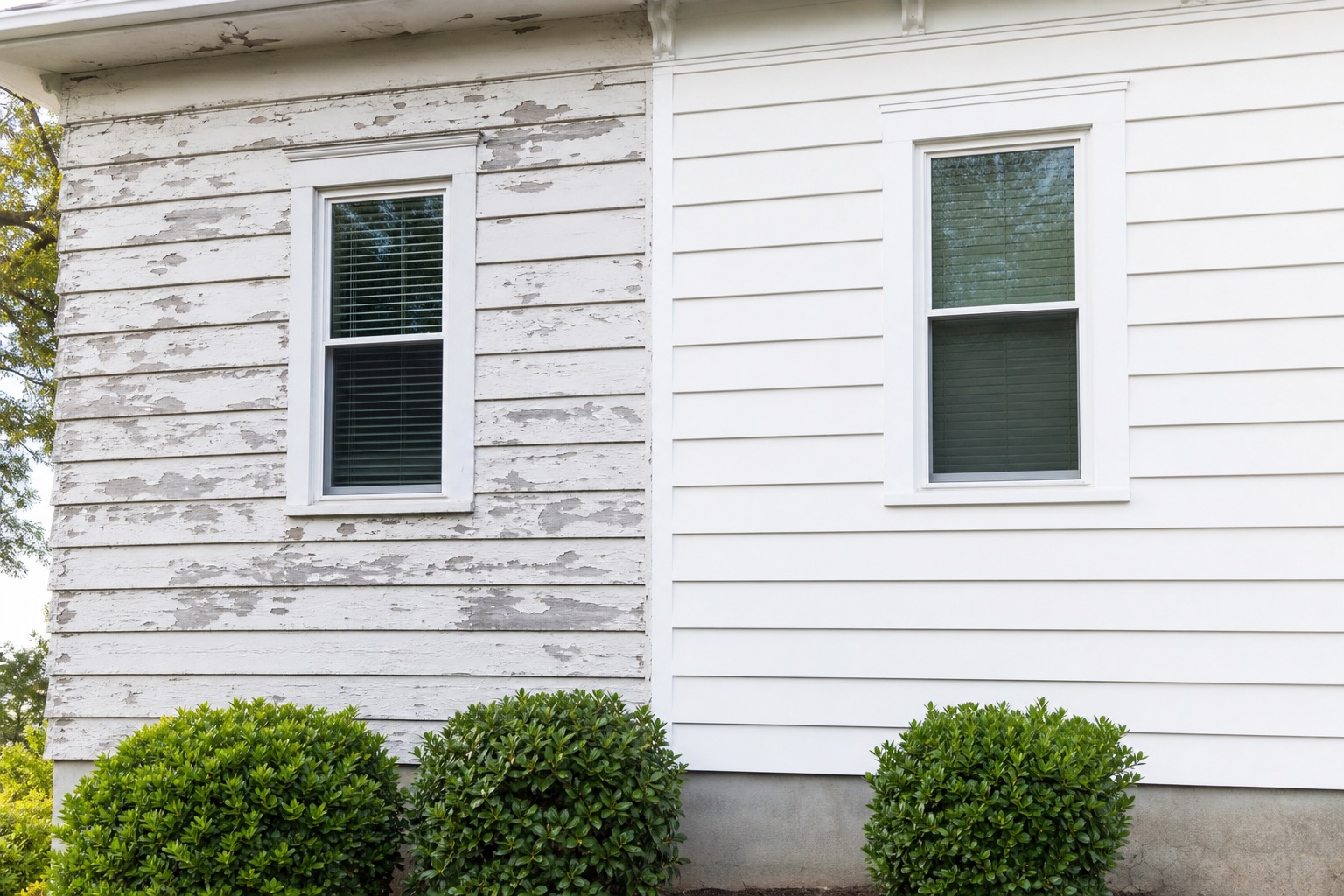
Exterior Painting Service Mold Prevention Tips
Kentucky's humidity gives mold and mildew plenty of opportunity to take hold on exterior surfaces, especially on shaded walls and areas with poor drainage. B&M Painting and Construction builds mold prevention into every exterior painting service in London, KY.
Why Mold Targets Certain Areas of a Home
Shaded north-facing walls, areas under overhangs, and surfaces near sprinklers or downspouts stay damp longer than the rest of the exterior, making them prime spots for mold and mildew growth. We pay extra attention to these zones during both prep and final inspection.
Poor ventilation behind siding can also trap moisture, so we look for signs of trapped humidity before painting over any suspicious area.
Homes surrounded by mature trees or built close to a hillside, common throughout the London, KY area, tend to see more shade and trapped humidity than homes on open lots. We factor this kind of site-specific exposure into our prep and paint recommendations rather than applying the same approach to every property.
Cleaning Mold Before Painting
Painting over existing mold or mildew almost never solves the problem — it usually returns and can even show through the new paint. We treat affected areas with an appropriate cleaning solution and let surfaces fully dry before any paint is applied.
For heavier mold growth, we may recommend addressing a moisture source, like a clogged gutter or poor grading, before painting to prevent the same issue from recurring.
We also check crawl space vents and foundation areas for excess moisture escaping near the base of exterior walls, since this often-overlooked source of humidity can undermine mold prevention efforts higher up on the siding.
Choosing Mildew-Resistant Paint
Many exterior paints include additives designed to resist mildew growth, and we select formulations suited to the amount of shade and moisture exposure each side of the house receives.
Higher-quality exterior paints with these additives cost a bit more upfront but significantly reduce the chances of mold returning within the first few years after painting.
We also test problem areas for existing moisture levels before painting, since applying paint over a surface that hasn't fully dried can trap dampness underneath the new coat. This extra step takes a little more time upfront but prevents mold from reappearing almost immediately after a fresh paint job.
Improving Airflow and Drainage Around the Home
Trimming back shrubs and landscaping that touch the house improves airflow and helps painted surfaces dry faster after rain, reducing the conditions mold needs to grow.
We also check that downspouts direct water away from the foundation and siding, since poor drainage is one of the most common causes of recurring mold on exterior walls.
We also inspect attic and soffit ventilation while we're working on the exterior, since poor attic airflow can push moisture out through the roofline and affect paint performance on the upper sections of exterior walls.
Ongoing Prevention After the Paint Job
After painting, an annual rinse of siding helps remove pollen, dirt, and early mildew growth before it has a chance to take hold in the paint film.
If mold returns to a specific area despite these precautions, it's usually a sign of an underlying moisture issue that's worth addressing directly rather than simply repainting the spot again.
If a customer notices mold on an interior wall that shares an exterior wall with a known moisture issue outside, we treat this as a sign the two problems may be connected and worth addressing together rather than separately.
Signs That Prevention Efforts Are Working
A well-prepped, mildew-resistant paint job should show minimal to no dark spotting on shaded walls even after a full humid Kentucky summer. If previously problematic areas stay clean through a full season, that's a good sign the prevention steps are holding.
We encourage customers to do a quick visual check each spring, focusing on the same shaded and low-airflow areas that caused problems before, so any early mold regrowth can be addressed before it spreads.
Customers who've dealt with recurring mold before painting often notice a real difference within the first year after we address both the surface prep and the underlying moisture source together rather than treating them separately.
Conclusion
Getting the details right on exterior painting service mold prevention tips is part of how B&M Painting and Construction delivers lasting results for exterior painting service across London, KY. If you have questions about your own project, our team is happy to help.
Frequently Asked Questions
No, we clean and treat mold-affected areas and let them fully dry before painting, since painting over mold rarely solves the underlying problem.
Yes, we select exterior paint formulations with mildew-resistant additives based on each wall's sun and moisture exposure.
Recurring mold is usually a sign of poor drainage, clogged gutters, or landscaping that traps moisture against the siding.
Trimming back landscaping, keeping gutters clear, and rinsing siding periodically all help reduce the moisture that mold needs to grow.